
Why Early Alert Programs Fail—and How to Build One That Works
Most early alert systems in higher education flag at-risk students but rarely move retention. Why early alert programs fail—and how to build one that works.
Most early alert systems in higher education flag at-risk students but rarely move retention. Why early alert programs fail—and how to build one that works.

Modernize trade school admissions without a big IT team. Choose a mobile-first admissions CRM that automates follow-up and connects aid before Fall 2026.

Choosing enrollment management software in 2026? Here are the 5 features the best CRM for higher education must have to win student yield and retention.

💡 TL;DR: Roughly four in ten students who leave college cite finances as the reason. But the underlying failure is usually operational — aid applications stuck in paper queues, status updates that take weeks, and a process that assumes students check email and walk into offices. Today’s students live on

💡 TL;DR: The cost of manual enrollment at a small college is rarely a budget line — it’s a retention leak. Coached Pell-eligible students at the University of Utah retain 21.4 percentage points higher than uncoached peers. Austin Community College pushed graduation rates from 7% to 23% with

💡 TL;DR: Most trade schools don’t lose students to competitors. They lose them to their own internal handoff. Admissions marks a student “enrolled”; aid still shows them incomplete; the registrar doesn’t know either way; the student gets three different answers in three days and disappears. With Workforce Pell

💡 TL;DR: Community colleges are having a growth moment — 4% enrollment growth in fall 2025, outpacing every other sector. But 97% of young adults own a smartphone and 27% rely on it as their only internet connection. If your enrollment process assumes a laptop, you’re filtering out exactly the

💡 TL;DR: Paperwork at a trade school looks like a staffing line item but acts like a liability. It consumes 10-20% of your admissions and aid team’s week, delays students by days at a time, and creates the exact conditions Title IV auditors flag. With proprietary schools required
💡 TL;DR: Small colleges don’t lose students one at a time — they lose them in the gaps between systems. A Student Relationship Management (SRM) platform unifies admissions, financial aid, attendance, academics, and engagement into one workflow, so the at-risk student gets flagged on day 14 instead of semester

💡 TL;DR: 38% of students who drop out say finances drove the decision — but the underlying failure is usually administrative, not financial. Aid gets awarded late, paperwork sits in queues, and students leave before the disbursement hits. Automated financial aid processing compresses the timeline from weeks to days, catches missing

💡 TL;DR: Vocational-focused public two-year colleges have grown enrollment 20% since spring 2020, while four-year universities have stayed flat or declined. The reason isn’t mysterious — it’s price, speed-to-career, and the fact that Gen Z is choosing programs with clear labor-market outcomes. Any

PowerCampus Is Sunsetting: Your SIS Replacement Options in 2026 When Anthology filed for Chapter 11 bankruptcy on September 29, 2025, it wasn’t a surprise to anyone watching the financials — but it was a gut punch to the hundreds of small colleges that had built their operations on PowerCampus. The

Institutional Growth
What the Anthology Bankruptcy Means for Your Student Information System Your SIS vendor just filed for bankruptcy. Now what? If your institution runs on Anthology’s PowerCampus — or any of its suite products — September 29, 2025 was a date that changed your technology roadmap whether you were ready for it

Institutional Growth
SRM vs. CRM: What Small Colleges Actually Need for Enrollment Management The higher education CRM market is projected to hit $3.2 billion by 2025 and grow at a 16.2% annual rate through 2035 — and a meaningful slice of that spending is going to the wrong category of tool

Student Success
It’s the first week of June. Your admissions team just closed out the best yield cycle in three years. You hit your enrollment target. Someone brought in donuts. The deposit deadline passed and the numbers looked solid — 340 confirmed students, housing assignments going out, orientation emails scheduled. Then August

Workflow Upgrade
Introduction: The High Stakes of Student Management Changing Landscape for Small Colleges in 2026 Small colleges in 2026 face mounting disruptions: unpredictable shifts in enrollment, aggressive EdTech investment among peers, and fast-changing regulatory demands. These changes force institutions to adapt rapidly—operational agility and digital transformation are now mission-
Workflow Upgrade
Why Are Financial Aid Applicants Falling Through the Cracks? When trade schools and community colleges invest resources in recruiting students, every unfinished financial aid application is an urgent warning sign. Institutions are seeing enrollment opportunities slip away—not because of demand, but because the financial aid process itself is confusing,

Student Success
Introduction: Why the First 45 Days Matter in Student Success Defining the Critical Early Period The opening weeks of a student’s journey at a trade or vocational school represent a pivotal turning point. Evidence shows that the initial 45 days often establish long-term academic habits and mindsets. During
Institutional Growth
Key demographic and economic drivers Fewer high school graduates, a growing skepticism about the return on investment for four-year degrees, and lingering pandemic aftershocks are converging to fuel the cliff. Gen Z is especially attuned to practical, skills-based education that leads directly to stable careers. In a climate
Student Success
Why Student Retention Matters for Small Colleges The Cost of Student Attrition The margin for error at small colleges and trade schools is thin. High attrition rates threaten institutional survival, especially in environments where every student matters: * Tuition and state funding form the backbone of most small college budgets—when
Workflow Upgrade
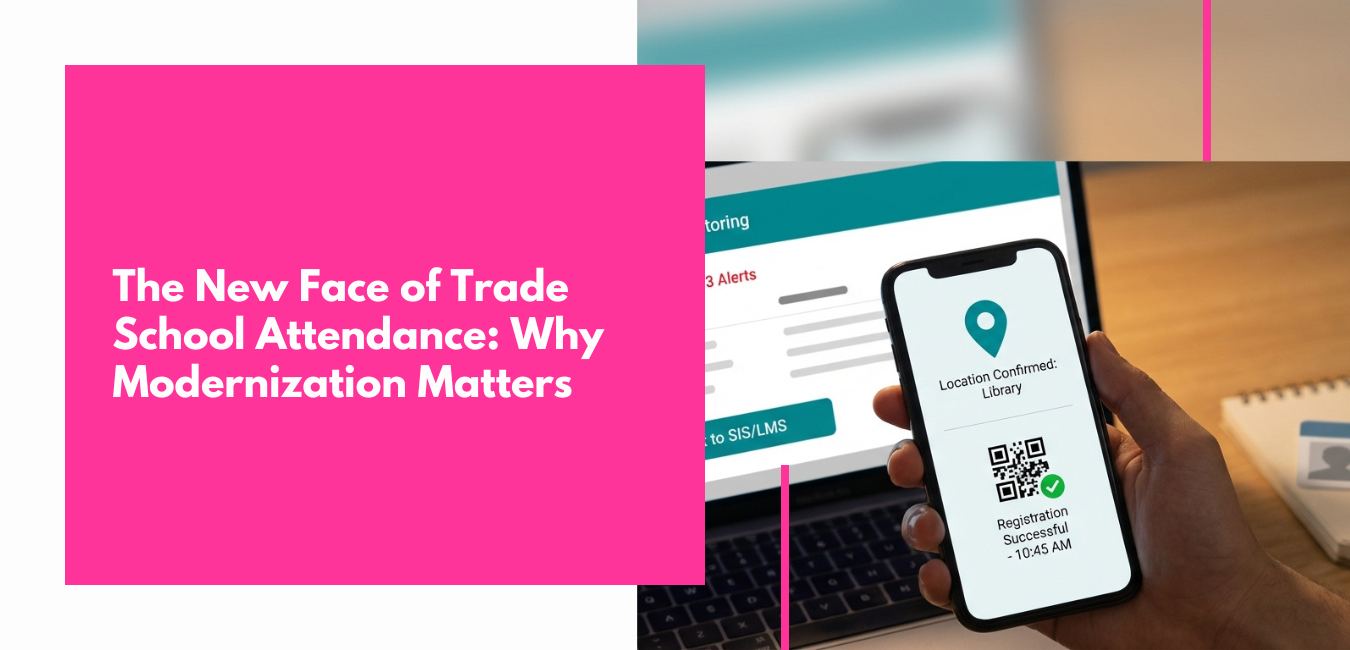
The New Face of Trade School Attendance: Why Modernization Matters Enrollment and Industry Trends in 2025 and Beyond Trade school enrollment is undergoing historic expansion, with a projected 6.6% compound annual growth rate (CAGR) through the end of the decade. Fall 2023 alone saw program enrollments reach 5.5

Institutional Growth
This summer, the president of Ferrum College spent Saturdays knocking on doors in Roanoke, Virginia, leaving pamphlets and hoping to recruit students. She visited 35 homes in one afternoon—not guerrilla marketing, but desperation following the FAFSA debacle. When your institution’s leadership is literally door-knocking to fill seats,

Student Success
Vocational-focused two-year colleges reported nearly 20% enrollment growth since 2020, while small traditional colleges close weekly. The difference isn’t quality—it’s that students increasingly ask: “Will this get me a job?” 86% of bachelor’s degree graduates secure employment within six months. Outcomes aren’t bad.

Institutional Growth
At least 15 nonprofit colleges closed in 2025 due to enrollment and financial challenges. The “enrollment cliff”—a projected 15% decline in college-age students through 2029—is hitting small institutions hardest. For colleges with 50-500 employees, the math is brutal. Small institutions are 47% more likely to face